
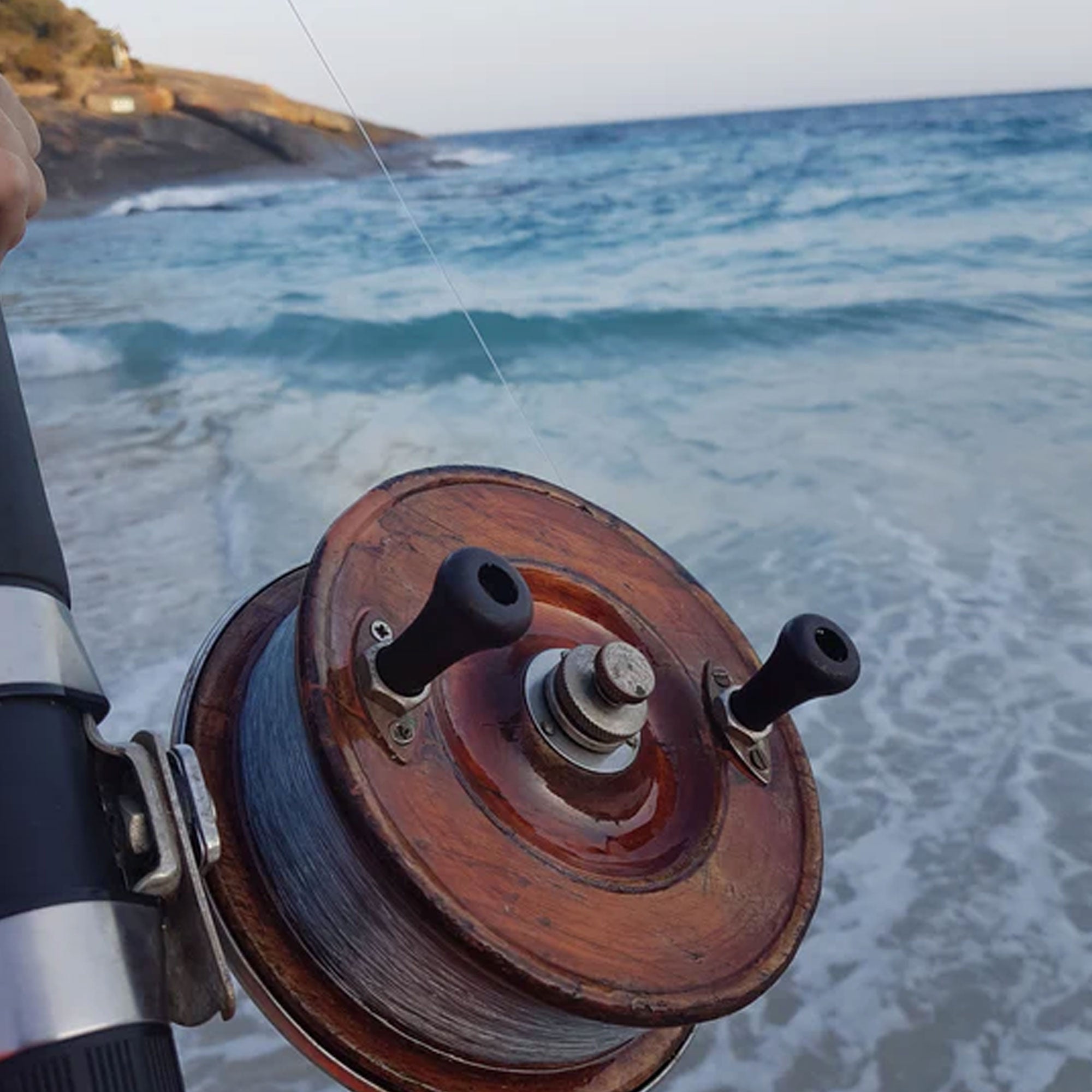
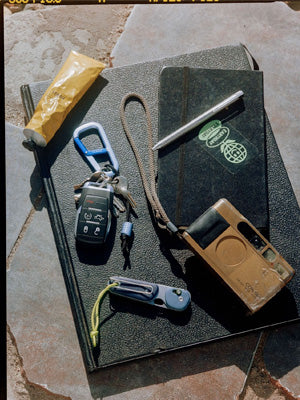
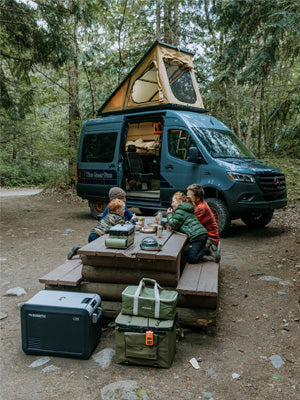




The engine is off. Salt is drying across your forearms. The board's on the grass, fins up, and a puddle spreads under the wetsuit you haven't found the energy to hang. Sets keep arriving but your session is done. You're in a carpark holding a cup. It is the only thing you are doing.
Activewear. Action sports. The words we use to describe what we do focus on the dynamic part. Fair enough; a car park is only worth sitting in when you've just come from doing something somewhere else.
The coffee before dawn with the heater running and the windscreen fogging. The thermos at the summit. The clink of glass by the fire in appreciation for the particularly good telling of a story heard a dozen times before. Everyone knows these are good bits.
It's often the bit we jettison first. When you're squeezing fun into a window, your instinct is to use as much of it as you can to be on the move. Thing is, the stationary bit's doing some heavy lifting and not getting any credit.
THE BENEFITS
People with degrees and an affinity for this sort of thing have checked into it and come back with an answer a good deal more detailed than “it’s nice to sit down”. A lab had volunteers type a short sequence with their non-dominant hand. Ten seconds of typing, ten seconds of rest, thirty six times over. Almost all of the gain arrived in the ten second rests, brain activity shifting more in the gaps than in the work. Practising made the improvement possible. Stopping was where it was laid down.
The lab's summary was resting, early and often, may be as critical to learning as practice. Exercise runs a similar course. You don't get fitter during a session. The adaptation happens afterwards.
The coffee isn't training. But the interval it sits in is where training turns into fitness, and the interval is the bit you're cutting. Attention has more than one setting. After it hits the fan at the office and you're worn out from a week of crisis management you know the feeling. Doing what you love is not that dissimilar: reading a bank of swell, picking a line down a loose descent, watching a float sit fractionally wrong in the current, keeping half an eye on a weather front that wasn't in the forecast. Being out there isn't a rest from concentration. Hobbies tax the same faculty as the desk. Idling in between is the reset.
Stephen and Rachel Kaplan gave the recovery a shape, back in 1989. Attention Restoration Theory says refills occur in settings with a particular combination of qualities. A sense of being away, enough scope to wander around in, and something they named soft fascination: interest that holds the eye, doesn't make demands and leaves room to think while it does. Mindsurfing, watching clouds drift apart, staring into a fire. Sound familiar?
Fishing is the exception to the rule. For everyone else the pause sits either side of the thing; in fishing it IS the thing. Sitting quietly and watching moving water is the sport; the fish, when one turns up, interrupts it. Nobody has ever come off a riverbank complaining they didn't get enough casts in. Which may explain a good deal about fishos.

BACK TO THE WINDOW
The sensible thing is to get in earlier. Stay out longer. Skip the coffee, drive home wet, first call of the day made from the driver’s seat. The cost is losing the adaptation happening in the interval. If attention refills while you’re doing nothing, are you losing more than you bargained for?
There’s a second layer of the onion to consider: researchers went looking at people who regard leisure as wasteful, and found they enjoy their leisure measurably less, but that it splits at intent. Where an activity has a purpose attached, exercise being their example, the belief does no damage at all. It’s the leisure done purely for its own sake that suffers. Nobody has run a study on whether a shorter surf and a bit of a dawdle might be “better”.
Return to the car park, the gear strewn across the ground, and the steaming cup of liquid in hand.
Hanging out has no purpose and that's what makes it useful. Attach an expectation to it and it stops doing the job it already had. Which lends one item an interesting distinction.

MADE FOR THE STOP
Kit is geared for going. The rod, the fins, the boots and the pack all exist to get you out, keep you out, and go further. A vessel only makes sense if at some point you intend to stop moving. It's the single piece of gear championing the pause.
It works at both ends of the day. Hot in the dark, before you're entirely sure you want to be there; cold once the sitting down has been earned. That vessel gives you something to do, while you do nothing.
The pause isn't the point. The stop draws meaning from the going. But the trade runs both ways. A gentle drift occurs when you forfeit the break, and the thing you built your week around gradually becomes another item that gets done, ticked and left behind on the way to the next. You still go. You just might find you don't look forward to it in quite the same way, or feel quite as refreshed after.
The middle bit is still the best part. Nobody's arguing otherwise. You don't stop instead of going. You stop because you went. And a fair amount of what you went for arrives afterwards while you’re holding a cup and doing nothing at all.
Shop the story
made for the stop
Everything else keeps you moving. A vessel is the exception that assumes you're not. Hot in the dark, cold once the sitting's been earned. Here's to doing nothing!


