
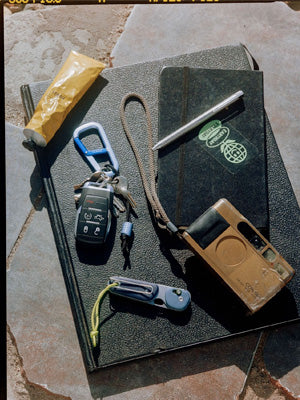





A folding knife, closed. A torch no longer than a finger. A pen that looks like it was machined rather than assembled. A watch. A wallet barely bigger than the cards it holds, a money clip, keys on a ring, splayed and shiny. Analog items sitting square to one another on a slab of timber, lit like a still life painted in oils.
The genre is called everyday carry, shortened to EDC. Social media accounts, forums and a subreddit running since 2009 are dedicated to photos like these. The community calls them pocket dumps.
CARRY ON
Every one of those objects was chosen, at some point, to fit a pocket, or a pocket was made, at some point, to fit it. From the Renaissance onwards a European man's coat, waistcoat and breeches came with pockets sewn in, and by the 1700s a well-dressed individual might be carrying a dozen. Men's clothing was a carry system from the start. Ladies got a different deal. From around 1650 a woman wore a pair of flat cloth pouches, often embroidered, tied around the waist and hung under the petticoats. They were enormous compared with anything sewn into trousers today.
An aesthetic evolution changed all that in the 1790s when dresses went slim, high-waisted and sheer. A pair of bulges ruined the silhouette so the pocket came out from under the skirt, silk replaced linen, and the result was carried on the wrist on a cord. These were called reticules, and detractors who thought a tiny bag was a dumb idea mockingly referred to them as ridicules. Necessity became fashion, and fashion was status: the handbag began at the top, and everyone else stuck with the pocket for another century. When skirts went wide again, pockets went back underneath, and the two carried on side by side. Today, the bag is everywhere. Women’s pockets not so much.

IT’S ALL IN THE NAME
Back to the pocket dump. The knife is a pocketknife; the container defines the object. The pocket has been one of the most definitive design briefs in history; “make the thing fit here”. Pocket-sized stopped meaning “fits in a pocket” and started meaning “with you always”. A byword for convenience whole industries re-organised around. The watch came off the neck-chain and into the waistcoat, and stayed there for three hundred years. The paperback exists so a book can fit where a man kept his tobacco. The story goes that Sony's salesmen wore shirts with pockets cut oversize so the first transistor radios would fit. And in 2001 a music revolution kicked off with the promise of “a thousand songs in your pocket”.
Every one of those objects was adapted to suit the vessel people had by default. The pocket dictated and the object complied. That's the direction we're used to. But it goes both ways.
PRETTY, USELESS
Look at your jeans. That small pocket inside the right front pocket, the one you've never used, was on the very first pair Levi Strauss patented in 1873, and was made for a watch. Within a couple of generations the watch left, destined for the wrist. The pocket stayed. It's been on every pair of five-pocket jeans since. Made to hold a thing almost nobody carries, kept because jeans look wrong without it.
In 2006 Levis RedWire DLX tried to re-purpose the watch pocket with a cradle for an iPod sewn into the hip, retractable headphones, and an actual joystick stitched in so you could skip tracks through the denim. The iPod is gone now and with it the joystick. Guess what isn’t?
It's not the only example. The shirt pocket is cut to the length of a pen. Suit jackets contain a space for a train ticket nobody has held in twenty years. Any jacket from the 2000s has a good chance of including a "media pocket" with a rubber grommet for a headphone cord.
This is the direction nobody is forming a community around. The object arrives, cloth folds in accommodation, the object departs, and the shape remains. Function makes the pocket. Sentiment preserves it.
FIT FOR PHONE
The object not on the table is one everybody in the world has. It’s also the one that doesn't fit. It used to. The first iPhone had a screen you could cover with a business card and it went into a front pocket. Every year since it has grown. The pocket is cut by a pattern predating the device by a century. It has not. The phone is now the thing the pocket is measured against. The object is dictating again, but this time the cloth is not obeying.
The cards, the keys, the torch and the wallet are all one device. Everyday carry is converging, while the idea of everyday carry is inflating: the knife, the pen, the multitool, the carabiner. The pocket empties while the kit grows, and the kit needs somewhere to go. So men are carrying bags. Slings, crossbodies, chest rigs are a part of the EDC world, described with adjectives like tactical, technical and utility. Two hundred years ago the pocket moved off a woman’s body and into her hand because fashion demanded it. Modern men are arriving at the same destination by a different route.

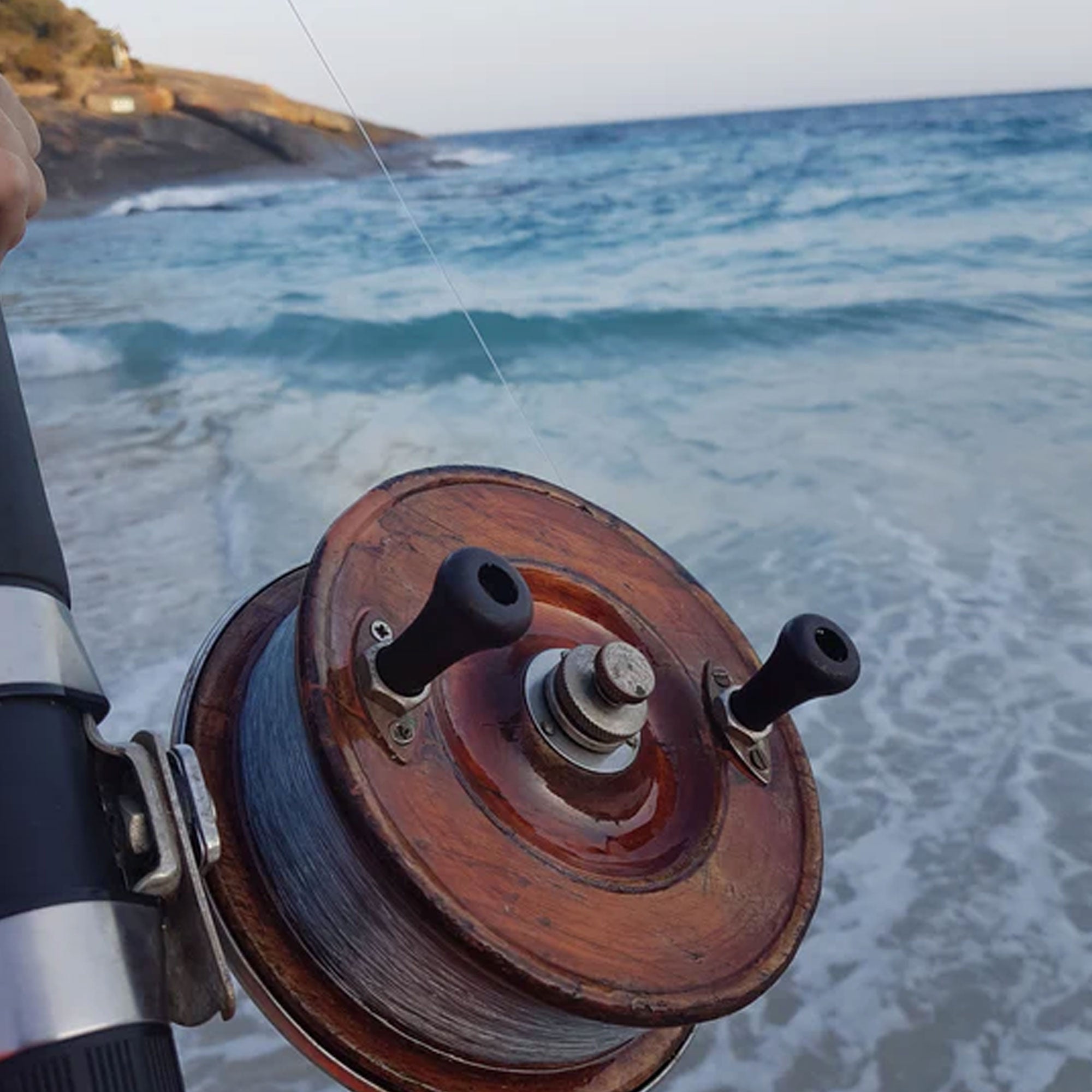
There's one place the pocket remains undefeated. Walk into any tackle shop and you'll find the last great pocket garment on earth. A fishing vest is nothing but pockets, zipped and flapped and mesh-fronted, sized for fly boxes and tippet spools and nippers on a retractor, with a pocket on the back for a rain shell and a ring for the net. It is the embodiment of “carry” and nobody who wears one calls it EDC.
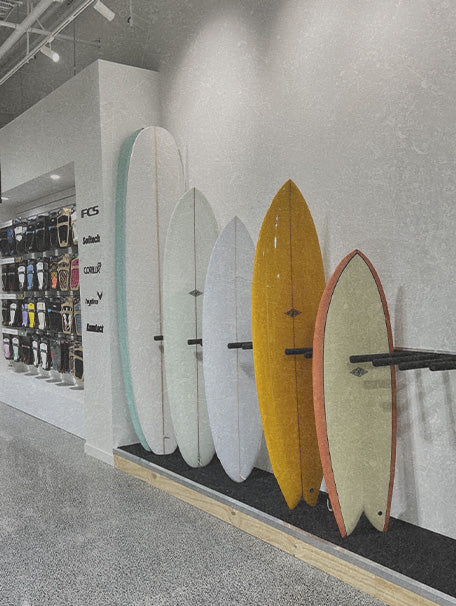
From the water’s edge to the backline. Boardshorts have one pocket, with a loop or a tab made for a car key, on the assumption you shouldn’t take into the water anything more than required. The same philosophy of need expressed at opposite ends of the spectrum, with cargo shorts, hiking pants and the jacket with the chest pocket cut for a map sitting somewhere in between. The outdoor wardrobe takes pockets seriously. If there’s one place where its future is safe, it’s probably here.
POCKETS OF RIDICULE
Which leaves pockets that don't work, and what they tell you. The watch pocket has sat empty for a century. Nobody complains about it. The pockets on a pair of women's trousers, on the other hand, might be nothing more than a seam included for aesthetic reasons. “It has pockets” is an expression of surprise and delight that says more in three words than this post ever could. A men's suit jacket, by contrast, comes with its pockets tacked shut. Fully functional and the wearer is given the option to never use them.
Functional and unused, Functionally useless and uselessly functional. Any one of which might, ironically, describe the item we all carry every day. Phone-as-everything is the current trend but it’s an ever-changing scenario. The wrist, the ear, the face are all in play. When the glass and metal slab becomes redundant and wallets, keys and notebooks are worn instead of carried, the pocket, shaped by the memory of four hundred years of things they held, might have nothing left to hold but a pair of hands.
The pocket dump doesn't explain whether Every Day Carry is cosplay, nostalgia, the hype cycle, a rebellion against digitisation or that people simply like having something to do with their hands. It just lays the objects out and draws its name from the one thing that’s always stuck around yet never shown.
The rest is ours to decide.
Shop the story
Pocket, head, hip
One made for the pocket, one worn instead of carried, and one that sits at the waist, right where the tie-on pocket used to hang.


