



Hours of exhaustion and discomfort about to be rinsed away. Imagine the levels of froth.
For most, riding a bicycle through a sandstorm in hellish heat triggers a desire to never repeat the experience. After enduring said sandstorms while filming Niokobokk, Laura Wilson and Ben Herrgott are undergoing a second 8,000km ride along the African coast. Adversity, it seems, has had the opposite effect. They got online somewhere in Ghana and sent us an update.
Tell us about yourselves and your film.
We are on a 3-year trip from Antarctica to Africa, following the coastlines of the Southern, Pacific and Atlantic oceans. We sailed to Antarctica and found surfable waves surrounded by penguins, then on to the Falkland Islands, Chile and Peru.
Eventually we flew to France to cycle from Ben’s childhood village, near the Alps, across to the French Atlantic coast, then along the coastline of Spain, Portugal, Morocco, the Sahara, Mauritania, Senegal and the Gambia. We documented it as best as we could to share with our family and friends - this was the start of Niokobokk.
What did you have in mind at the beginning?
A plan to experience a slower way of traveling, where interactions with people and surroundings are easier and constant. The surf was a major focus also. We imagined following the Atlantic meant we could find many uncrowded waves, camp at the front of them and have time to wait for optimum conditions.
However, travelling by bicycle and finding the perfect surf conditions don’t go together.
The first 800km across France were as good as it gets: empty trails and country roads, stunning wild camping, farmers markets galore, patisseries, with the anticipation we would be surfing very soon.
We reached the coast after a 90km sprint in a huge electrical storm only to realise all of Europe flocks to the Southwest of France during summer with a fair chunk of them keen on surfing!
Spain and Portugal weren’t as crowded, but we tackled rain for six-weeks, almost every day. Our gear was constantly soaked.
Very few surf spots were also ideal for camping, accessing fresh water and buying food. Many times, we jumped back on the bikes after our surf and rode another 30-40km to find a place to set up camp.
Morocco and its numerous word class waves attract surfers from every continent - often with up to 200 in one spot.
In the Sahara and Mauritania, we found empty line ups and the utopian ideal became reality. We also scored some fun waves in Senegal.
The tides, swell and wind didn’t cooperate that often, but we still believe a bike is the best way to travel and we loved every kilometre!
Give an overview of the current expedition.
We will traverse Guinea-Bissau, Guinea, Sierra Leone, Liberia, Côte d'Ivoire, Ghana (where we are currently), Togo, Benin, Sao Tomé & Príncipe, Angola, Namibia and South Africa. We gave ourselves nine months and worked hard to synchronise our progress with the surf seasons in each region.
Walk us through your setup.
We use mountain-bikes as we enjoy the off-road and unpaved routes. They often lead to incredible villages, jungles or stretches of coastline.
Laura carries all the cooking gear and food, a medical kit, our tent, a rather big camera, sleeping bag, laptop and her clothes.
Ben pulls a trailer of spare bike parts, wetsuits and two surfboards.
In the Sahara Ben’s set-up was 70kgs and Laura’s was 50kg.
What are the absolute essentials?
We had great intentions to go lighter and we failed! Our medical kit grew, we added two ultra-light foldable chairs, mosquito sprays and lots of sunscreen! Every gram makes a difference, so we are feeling it!
We drink close to 10L each day and never cease to be hungry. There is often long distances without access to food and water so we make sure we have enough to get us through. Our surfboards, cameras, and a mosquito net – compulsory!
We carry a fantastic water filtering system and plenty of salt tablets, as we found it hard to stay hydrated when cycling in extreme heat.
We use a small Trangia stove that burns methylated spirits.
Laura has a Verdure board, shaped by Gomez, used since we started in Antarctica. It has an EPS core, wrapped in hemp and bio resin. The deck is cork so we don’t need wax, and the bottom is using 3mm paulownia wood with natural hard wax oil. The rails are made of laminated bendy ply. The board seems totally unbreakable.
Ben’s board is from Sergio Gomez. A 6’0 thruster with some volume - good for a variety of conditions. It also uses hemp and bio resin, with cork front and tail pads.
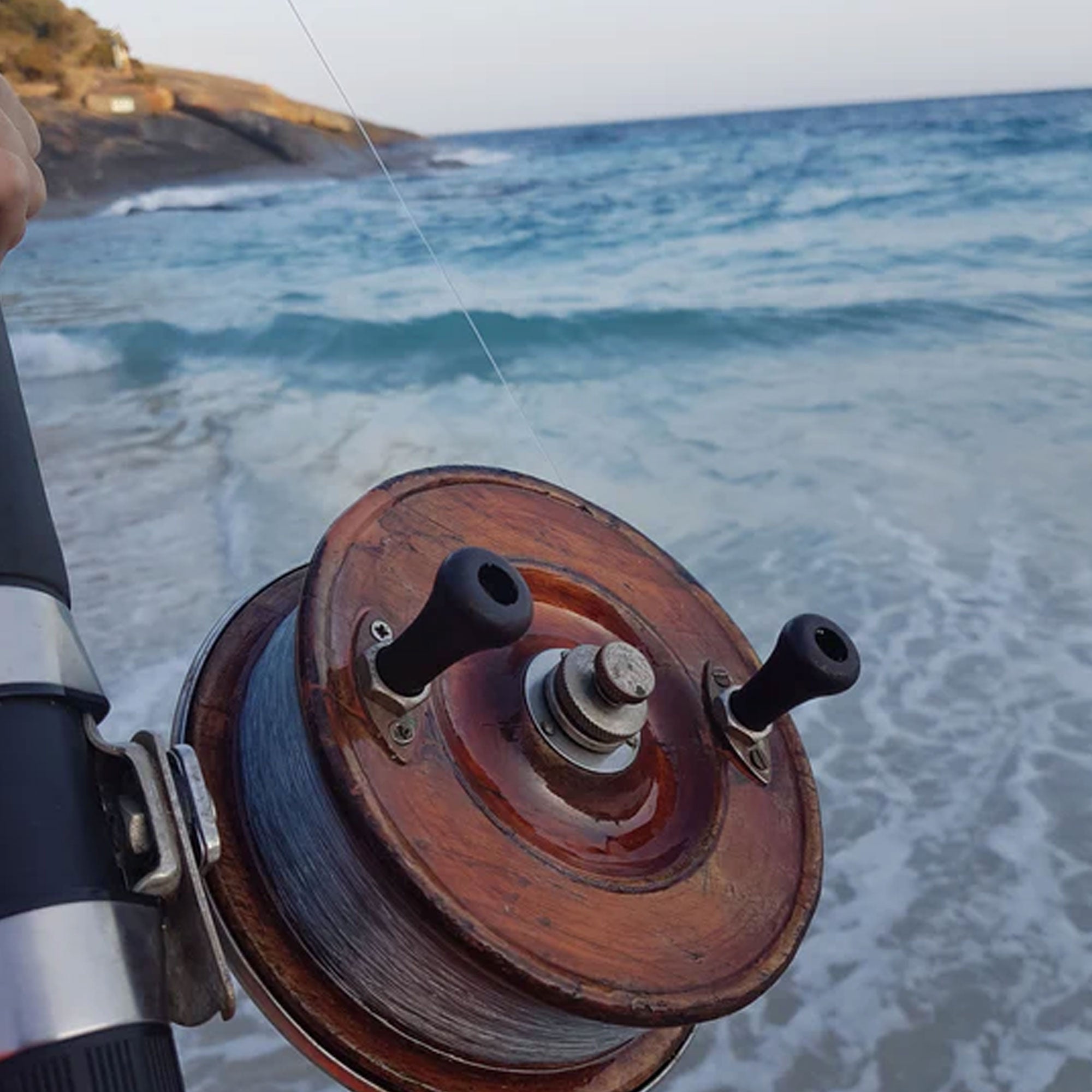
If only they could be telescopic!
 Miss the rush hour and once the locals head off to work you’ve got the peak to yourself.
Where are your “must visit” surf spots?
We want to surf a 600m right point at the Senegal & Guinea-Bissau border. It needs a big North West swell to work and we have allowed for extra time to wait a while.
Bureh beach in Sierra Leone, Robertsport in Liberia, Assinie in Ivory-Coast, Black Mamba in Ghana… it goes on!
We are most excited about Angola and its long lefts! Namibia also, but we are realistic. Skeleton Bay is most likely too heavy for us!
Which surf-oriented locations should a tourist consider?
An easy destination is Dakar, the capital of Senegal. It has very consistent swell coming from the North and South, and a multitude of quality waves in a small zone. Accommodation and food are affordable, and the locals are full of energy. The Senegalese culture is very vibrant and different from most well-known surf destinations.
What’s your approach to film making?
We don’t want to impact the trip, the fun and the itinerary. Sometimes we don’t film for a week. When the surf is good, we surf, rather than film. We enjoy filming the locals who absolutely rip, after we’ve had our share of fun.
Ben has made films for most trips since 2012. There are never any plans for them, aside from capturing the beauty of the location, the amazing characters and some of the hectic moments. Recording the sounds and music from each country is something we also enjoy.
The next film will most likely be a continuation of Niokobokk. We find that traversing Africa, along with the pace of our travel is quite thought-provoking.
What wisdom about travel can you share?
The biggest learning was to accept the surf conditions when arriving at a spot and surf whilst we could.
Travelling by bicycle is easier than it may initially seem. Our bodies and mindsets adapt and our definition of comfort (or lack of), changes quickly.
Keep expectations and assumptions out of the equation. An open mind, heart and eyes allow you to experience situations with a curious and learning mindset.
We embraced connections with those around us, as it is the people we meet that make travelling extra special. A vast majority of people want to be part of the fun and are always keen to lend a helping hand.
Regardless of culture, language or religion, African solidarity is very real. The sense of community is exemplary. The constant acts of kindness (that we experienced) are unfathomable.
 When every kilo counts, your board doubles as a table.
Were circumstances ever more than you could bear?
In Spain and in the desert, we endured strong winds which were difficult enough at times, but it was the sandstorms in over 40º that made it genuinely tough, especially when there was nowhere to seek refuge and no choice but to keep going. The wind forced Ben off the road many times. The effort was intense, for too long and eventually he developed heat stroke, unable to eat, drink or even walk. It lasted two days.
As we headed South into Senegal, it didn’t cool down at night, and the humidity made everything sticky and damp. After riding seven to eight hours a day and with little water to wash the body and no cold water (our drinking water is warm after just a few hours of riding), it becomes very uncomfortable and difficult to get a good night’s sleep.
The harder it got, the more we embraced the experience - the feeling of getting through something tough is a reminder that we are alive and builds perseverance and resilience.
Pushing through has been a state of mind for us, knowing we have no choice (in some situations) and believing the situation won’t last forever. There is always something to look forward to: food, obviously, but also a nearby country border that might open another new experience and culture, comfortable accommodation (and a shower) and the interaction with locals that genuinely gives you wings.
Tell us about the Environmental Justice Foundation.
We discovered EJF through research on the topic of Illegal, Unreported and Unregulated (IUU) fishing in West Africa, when we came across their recently released report and film about the situation in Senegal, which is worth a watch.
The EJF works in some of the world's most difficult and remote countries to protect vulnerable communities, wildlife and wild places.
We are determined to raise $25,000 AUD to help EJF's surveillance programme which enables coastal communities and artisanal fishers to use a GPS app and drones to document and report trawlers operating illegally.
Through evidence of illegal fishing, and its impact, EJF brings a strong voice to the global discussion and works with governments, business and civil society for real systemic change.
What can someone do now to have an impact?
Make the best possible informed choice and be conscious of what we are purchasing.
By July 2026, all restaurants, cafes and takeaway shops in Australia must label seafood as A (Australian), I (Imported), or M (Mixed) under the AIM model.
Organisations like Seafood Industry Australia (SIA) and the Minderoo Foundation have campaigned for stricter, mandatory, through-chain traceability to prevent illegal seafood from entering the market. Give them a follow to keep up to date.
A great app called GoodFish Australia provides a sustainable seafood guide that helps us make the right choices.
We recommend a fantastic series called The Outlaw Ocean by Ian Urbina.
If you are in a position to do so, a contribution to the cause is greatly appreciated. Please find the link to our donation page here.
Shop the story
For the slow way round
Slowing down doesn't necessarily mean things get easier. Quite the opposite, sometimes!


