




Now Now Media, the team filming the FCS Go series, is dynamic duo Will Bendix and Alan Van Gysen. These two surf media veterans turned their love of storytelling into a lifelong pursuit. We got hold of Alan long enough to quiz him about his experience filming aboard the Milo in Alaska.
Header Image : A moment to relax and reflect after an incredible experience. Photo by Will Bendix.
Does a story narrative arc get built or do you let the actual filming decide the outcome?
You're like, “Oh man, I'd love to get a bear shot. I'd love to get orcas.”
One shot I was desperate to get was, I really wanted to swim up a river with my water housing and film salmon doing their thing, coming up the rivers to spawn and hanging out in groups. It was trickier than I expected, but I figured out what to do and blend in and I got some really beautiful shots.
When it comes to documentary filmmaking you're not shooting a Hollywood film, where you've got everything prescribed, everything needs to happen. It's more running guns down, shooting whatever comes to you in the moment, being prepared to shoot that as best you can when it does happen.
Towards the end of the trip, we realise we're not getting the surf stuff. We're like, okay, let's lean more into the fishing segments, the adventure and travel, the people, the relationships. Things that really are the meat and potatoes.

How close is close enough? Photo by Scott Dickerson.
You guys keep yourselves off screen.
The beauty of having a small team like ours. We've got Will, myself, and usually one other person we hire on location. We always work with somebody from the area. It’s important to hire locally and it's a really important way to know what's happening and get the real story on things. You've got somebody's inside perspective.
It's not us coming from the outside and making something up. You get invited in and those people take care of you. There were times on this trip where I'm filming something and Will would tap me on the shoulder, “hey, this is happening here ” Or I'll be like, “hey, Will, this is going down. We need the drone, let's get it up there.”
You don't want to see the camera. We're not treating it like a vlog.

By water, by air, or by SUP. Whatever it takes to get the shot. Photo by Scott Dickerson
Were there unique challenges shooting on the Milo?
Taking off and landing and navigating a drone on a vessel with a lot of aerials, masts and lines, that's really tricky. To bring it back was always very difficult. I would be on the roof with Will when he brought it down. I must have caught it 20, 30 times. Only once did I grab it too excitedly and got the blades to the fingers. It's like a million paper cuts.
Was there a point during the Orca scene where you wondered if things might take a turn for the worse?
Scott got straight out onto the SUP and went to the Orcas. There was no hesitation, either he's done this before or he's not worried about it. Then Dylan followed suit. Knowing that orcas have never, ever attacked a human outside of a captivity was a comforting thought.
So I felt fairly confident.
You got to be respectful and cautious, so they didn't go straight on top of them. They went close but kept their space. I was grateful when both Dylan and Scott were back safely on the boat.
How close did you get to the bears?
There was a brown bear going up the mountain as we're coming out of the estuary and it was right there, you could have thrown a stone at it. You always have to be aware of bears in Alaska. We didn't have any serious situations, but where the fishing camp was, those guys carry shotguns and see them regularly. They have to chase them away.
The bears are a very real, serious danger there.
It’s a shock when scott jumps into the water in boardies.
He'd been sleeping for like 6 to 8 hours and I think needing a bit of a fresh start and a bit of a cleanse. For Alaskans that was like the height of summer, they were loving that weather. You wouldn't spend hours in [the water]. You would for sure get hypothermia.
A short dip in and then out onto the SUP, and you're paddling, and you've got the nice sun on your chest, and your skin drying out. As long as you weren’t in the water too long, it was fine.
It looked like something was happening every day.
Life's happening, nonstop. The down time I look forward to at the end of a busy day is, I’ll jump into my sleeping bag with my laptop and footage and catalogue the day, make sure I've got everything done.
I get up an hour before anyone else in the mornings and love a bit of quiet time with the Word. That was my special time, sitting on top of the Milo in the pre-dawn with a coffee in my hand and listening to the beauty of nothingness / everything, the whole of creation around you from the sky and the stars to the sea and the mountains and the land offshore.
Shop the story
The pre-dawn ritual
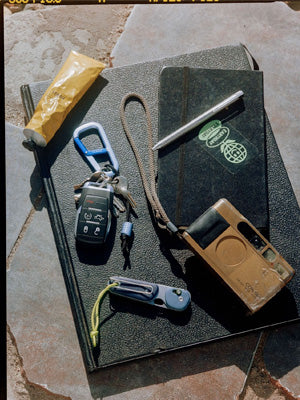
Before the drones go up and the housings go under, there's Alan's quiet hour on the Milo's upper deck, a coffee in hand, watching the light come up over the mountains. Here's the kit for making that cup properly, a long way from anywhere.


The Milo upper deck is a great place to appreciate the surroundings and store boards.
Not so much retrieving drones. Photo by Scott Dickerson.
NEXT PROJECT
Both films tweak the “surf film” genre.
We're not looking to make surf films like the classic old surf porn edits, giving you one dimension.
Whether you're going to Indo or Namibia or anywhere, you're looking to get waves, but this whole other 95% of your experience is non-surf, you're not riding a wave. There's other things happening. From all the years of doing editorial, surf, storytelling in magazines and print and stuff, the beauty of those stories has been to show other things, highlight and celebrate those.
We're always trying to incorporate other interesting storylines and threads. You go to a place and you want to connect with people. There's important topics together with the aspect of community and people and relationships. Media has a very important role, to help and benefit and improve things. That's where our hearts are at.
The first FCS Go film was Riding the Sardine Run. Now we’re in Alaska. Where’s the third installment headed?
FCS really want to go to remote places. It would probably be to an area that gives you a great sense of adventure with an element of uniqueness. It'll be an interesting one. Dylan has spent his later career on weird waves and looking for different waves. We could definitely lean on one of those great locations.
It's completely open.