





A creased map torn from a magazine is stuck to the fridge door. A faded line drawn on it follows the coast. A fresher line overlays it, in another colour, going all the way around. A note on your phone has multiple versions of a budget. You’ve favourited a few vans for sale on an app. What you haven't done is spend a night in one where the rain doesn't stop, the water tank's lower than you thought, and the only flat ground for forty minutes is a truck bay.
TIME TO BORROW ONE
How you go about it depends on what you have in mind. If it’s the whole loop, try a relocation. Rental companies needing vans moved between cities hand over the keys for next to nothing to get it done. The catch is the clock. Most windows run between three and fourteen days, you pay for fuel, and the van has to arrive on time. The loop is mostly road, so a relocation is a good test. You’ll know by the second long day whether you like it. You won’t learn much about pausing.
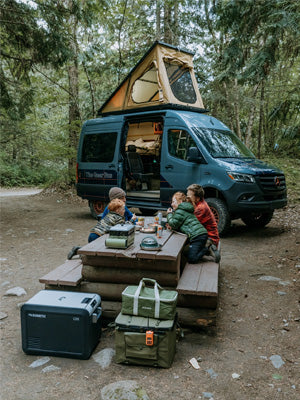
If it’s the coast, a board on the roof and a long term forecast setting the itinerary, you want to test staying put. Peer-to-peer hire, through platforms like Camplify, puts you in someone’s own van. Fitted out to suit someone specific, quirks included. Most trips start and finish in the same place, though some owners will quote for one-way. That suits a week based near one break, long enough to find out how the fifth dawn feels.
A commercial rental is the most predictable for a string of destinations: branches in the big cities, a fleet set up for people who’ve never done this, a kitchen that works the way you expect. For this trip, the fortnight is a smaller version of the trip itself. Whichever you choose, the variables are the same: days, kilometres, fuel, the deposit held on your card, and what happens if something gets dented. Read the excess terms, and check your policy.
THE HONEYMOON PERIOD
The first few nights deliver on the dream. Pull in late, cook something using one pot, and fall asleep to an unfamiliar soundtrack. Wake up early without setting an alarm. In one small study, campers in the Rockies without torches or screens took in more than four times their usual light. Their body clocks shifted to meet the sun: biological night began near sunset and finished at sunrise. Night owls and early birds ended up on roughly the same schedule. A van isn't a tent, and nobody's taking your phone away. Whether the same thing happens with an LED strip overhead, no one has measured. But you're outside more than you're in, and light has an impact.
The highlights keep coming. The first coffee with the side door open. A beach found after a wrong turn looking for fuel. The satisfaction of knowing where everything is, because there's nowhere else for it to be.
This is the part selling the idea. It's also the part you'd get on a long weekend. Around day four is when the van stops being a holiday and starts being where you live.
LESSONS LEARNED
That's when the education starts. Like how much water two people actually get through. Where the dump points are. The Coffs Coast lists six free ones, which is the kind of fact you never needed before and now plan a morning around. How much power a solar panel provides on an overcast day. It’s less than you'd hoped.
You learn about four o'clock panic when the light starts to go and where you're sleeping stops being theoretical. Rules can change at the council boundary. Coffs Harbour rangers handed out 15 fines at the Jetty Foreshores over one Christmas and New Year, along with dozens of warnings. Next door, Bellingen allows overnight stays at two signposted sites. Most apps provide plenty of info and not much in the way of solutions. Then it rains for days, and you learn what a living space feels like when the bed doubles as couch, kitchen and washline. If you're travelling with someone, you learn about them too. The good news is research on crowded homes is kinder than you'd expect: researchers found no link between crowding and couples separating, once money and home ownership were accounted for. But a van isn't a house and square metres don’t tell the whole story. These are the parts daydreams leave out and exactly what the trial fills in.
Handing back the keys will be a strange mixture of relief and disappointment but you’ll walk away with a list based on personal experience.
Knowledge about what you used, and what you missed. A knife sharpener, a chair you can fall asleep in, a mug that holds its heat. Whether four o'clock felt like a puzzle to solve together or the spark igniting a raging argument. Whether the rain was cosy or claustrophobic. Whether you can be alone with your thoughts.
It changes the dream, too. Another study found holiday-makers were happier than everyone else before they left, and mostly no happier once they were home. Much of the pleasure was in the anticipation. The fortnight doesn't take that away, but it informs the decision to do one big trip or lots of smaller ones. It gives you something real to look forward to, or inspires a new plan. Either way, you’ll make memories, learn a few things, and maybe add new lines to the map on the fridge.
Shop the story
Worth bringing from home
A borrowed van comes with a bed and a stove. These are the things you might miss: somewhere to sit at the end of the day, a coffee that stays hot, and a rinse after the surf.


